




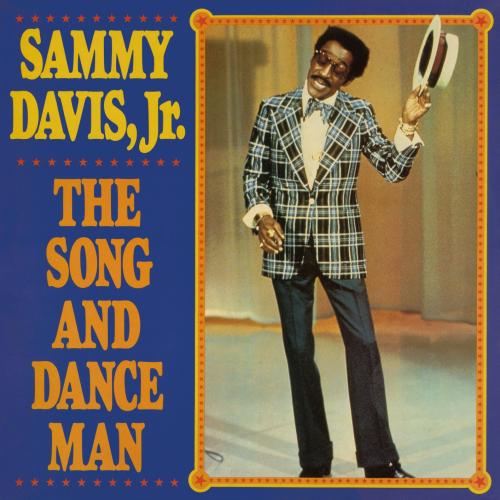
The Song And Dance Man (Remastered) Sammy Davis Jr.
Album Info
Album Veröffentlichung:
1976
HRA-Veröffentlichung:
12.12.2025
Das Album enthält Albumcover
Entschuldigen Sie bitte!
Sehr geehrter HIGHRESAUDIO Besucher,
leider kann das Album zurzeit aufgrund von Länder- und Lizenzbeschränkungen nicht gekauft werden oder uns liegt der offizielle Veröffentlichungstermin für Ihr Land noch nicht vor. Wir aktualisieren unsere Veröffentlichungstermine ein- bis zweimal die Woche. Bitte schauen Sie ab und zu mal wieder rein.
Wir empfehlen Ihnen das Album auf Ihre Merkliste zu setzen.
Wir bedanken uns für Ihr Verständnis und Ihre Geduld.
Ihr, HIGHRESAUDIO
- 1 Baretta's Theme (Remastered) 02:25
- 2 Love Is All Around (Remastered) 03:35
- 3 We'll Make It This Time (Remastered) 03:11
- 4 Mary Hartman (Remastered) 03:22
- 5 You Can Count On Me (Remastered) 02:11
- 6 Song And Dance Man (Remastered) 02:42
- 7 I Heard A Song (Remastered) 02:59
- 8 (I'd Be) A Legend In My Time (Single Version) (Remastered) 02:44
- 9 Snap Your Fingers (Remastered) 02:52
- 10 Chico & The Man (Remastered) 02:39
Info zu The Song And Dance Man (Remastered)
In the Billboard magazine edition of 30th November 1974, it was announced that Sammy Davis, Jr. had left MGM Records and signed for 20th Century Records. But this was no splashy media fuss, as Sammy’s previous signings had been, more a footnote buried on page 20. It was a difficult time for singers like Sammy on record. The same month Warner Records’ President Joel Smith told Billboard: “The record-buying audience is not buying that kind of legitimate pop singer. Each generation wants its own heroes … the people who love them in Las Vegas don’t buy records.”
Furthermore it was a difficult period for Sammy personally as well as professionally. Struggling to maintain his status in the entertainment world, he found refuge in alcohol and drugs and became an occasionally unstable performer. Outside of his demanding touring schedule, his focus shifted away from vinyl and toward television – he debuted a new syndicated talk/variety show hybrid titled Sammy & Company in April 1975.
Given the various factors at play, Sammy released only a handful of singles in the United States over the next two years, although all of them charted on Billboard’s Adult Contemporary (AC) chart in the US (at the time called the ‘Easy Listening’ chart).
One thing Sammy did in 1975 was lay down vocals to the instrumental theme to the television show Baretta for the show’s second season, which began in September. The theme, titled “Keep Your Eye On The Sparrow” was written and arranged by Dave Grusin and quickly became considered one of the best TV themes of the era. Singing the theme to a hit TV show was a first for Sammy, although he had a bit of a history of recording covers of TV themes. He had recorded the theme to My Mother The Car for Reprise and the theme to The Mary Tyler-Moore Show for MGM. In fact the theme song to Chico And The Man was the last thing Sammy recorded for MGM Records (he took it with him to 20th Century).
Inspired by his involvement with Baretta, Sammy stepped into the studio at the beginning of 1976 and cut a new recording of “Keep Your Eye On The Sparrow”, arranged and conducted specially by Dave Grusin himself. Released in the USA in March 1976, the single made it to #47 on the Billboard AC chart. But elsewhere in Europe, the song was an unexpected smash hit! In the spring of 1976, Sammy’s recording of the Baretta theme went to #1 in The Netherlands, Sweden and Belgium and was certified Gold. Perhaps there was a market there for an LP? The Song And Dance Man was born.
Sammy revisited the studio and recorded some more TV tunes. This included a new disco version of “Love Is All Around” (the theme to The Mary Tyler-Moore Show), two themes that had been instrumental on the actual shows but were now given brand new lyrics (Kojak and Hawaii Five-O), and an original piece that was written in tribute to the soap Mary Hartman, Mary Hartman, but was not based on the actual theme music to that show. The resulting LP, The Song And Dance Man, was released by 20th Century into foreign markets including Europe, Canada, Argentina and Australia but, it appears, not in the USA. Six of the ten inclusions were TV themes.
The remaining four cuts on The Song And Dance Man, all placed on Side 2, were a mish-mash of recordings taken from various places. Sammy had brought the country-styled cover “A Legend In My Time” with him from MGM. Previously released, it had been a semi-successful single way back in May 1973, rising to #29 on the Billboard AC chart. Two more country-styled covers, “Song And Dance Man” and “Snap Your Fingers”, both produced by Jim Vinneau, had been released on a single in September 1975 and had also made the AC chart, rising to #32. “I Heard A Song” was a patriotic tribute to great figures of then-recent American history. It had been recorded for a special double LP featuring multiple artists titled Happy Birthday U.S.A., which was released during 1976 to celebrate the United States’ bicentenary.
Sammy was always proud of his popularity in Europe, and he remains popular in the U.K., France and particularly Germany, even as his star has – alas – faded somewhat in popular culture memory in the United States. In 1977, 20th Century would release another LP, this time in The Netherlands only, including almost all of the TV themes on The Song And Dance Man, plus a few new ones, titled Sammy Davis, Jr. Sings The Great TV-Tunes.
"This collection from the Decca archives brings together some of the highlights from the career of the great Sammy Davis, Jr.," reads a note on the back of this British import, and that's a reasonable enough description. At 24 tracks with a running time of 74 and a half minutes, the compilation does a good job of sampling Davis' Decca catalog. The only caveat, of course, is that that catalog only represents a portion of Davis' overall recorded output. Decca was his first label berth; he signed with the company in 1954 in his late twenties and remained until, in his mid-thirties, he joined Frank Sinatra's Reprise label in 1960. In that six-year period, however, he managed to turn out a dozen albums as well as such special projects as a duet LP with Carmen McRae and the original Broadway cast album for Mr. Wonderful, in which he starred. So, there is no dearth of material to draw from. The compilers have made sure to include Davis' three Top 40 hits on Decca, "That Old Black Magic," "Something's Gotta Give," and "Love Me or Leave Me," as well as a track each from the McRae album ("Happy to Make Your Acquaintance") and the cast recording ("Too Close for Comfort," naturally). And they try to give a sense of this irrepressible entertainer's stage act on a version of "Just One of Those Things" packed with impersonations and a live performance of "Chicago" done à la Joe E. Lewis. Otherwise, the selection is filled up with standards by great songwriters like George Gershwin and Cole Porter. Davis' infectious enthusiasm is apparent on every track, as he rolls over the nouveau swing arrangements. The album could have used more annotations than a brief, generic biography, but as a one-disc summation of the Decca years, it is effective." (William Ruhlmann, AMG)
Sammy Davis Jr.
Digitally remastered
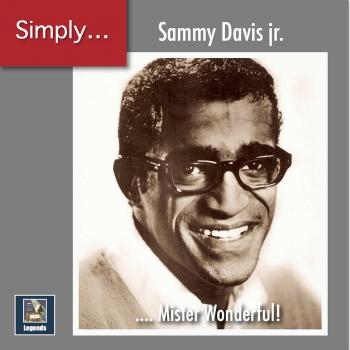
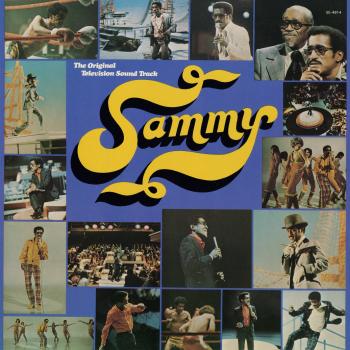
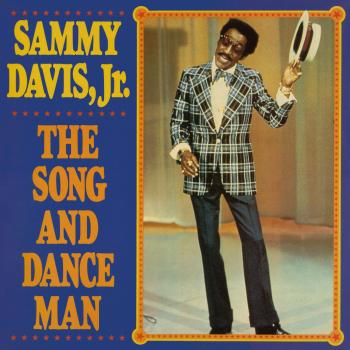
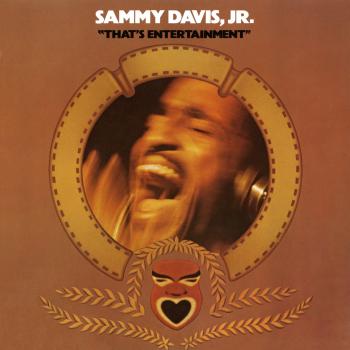
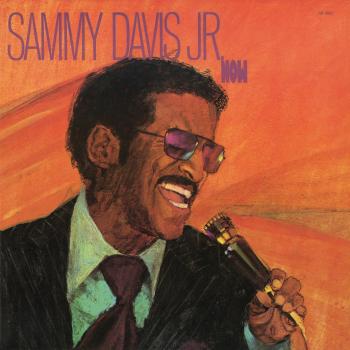
Sammy Davis Jr.
lived from 1925 to 1990. Michael Heatley from Vox magazine gives a short biography.
In the over hyped world of popular music music, there are legends, and then there are Legends with a capital L. There’s no doubting which category Sammy Davis Jr falls into.
For a staggering 60 years, from his debut as a four year old child star in the late 1920’s to his untimely death in 1990 at the age of 64, he more than justified his title of ‘Mr Entertainment’ and when he wasn’t inspiring headlines on stage he was making news of it, as a founder member of the Rat Pack with fellow superstars Frank Sinatra and Dean Martin.
It’s impossible in the space allotted to do more than scratch the surface of one of showbiz’s all time greats. Thankfully, Sammy Davis Jr left no fewer than three detailed accounts of life at the top. ‘Yes I Can’ (1965) and ‘Life In A Suitcase’ (1980) were followed by ‘Why Me’, published the year before his death. All are required reading.
He owed his early start to his parents, vaudeville star Sammy Davis Sr and Puerto Rican ‘Baby Sanchez, who performed with the youngsters adopted uncle, Will Mastin, in his act ‘Holiday In Dixieland’. But Sammy Jr soon became the star of the show as the newly rechristened ‘Will Mastin’s Gang, Featuring Little Sammy’ acknowledged. When the authorities forbade him to appear, so legend has it his father shrugged his shoulders, gave his son a rubber cigar and billed him as a ‘dancing midget’.
Being a star has made it possible for me to get insulted in places where the average Negro could never hope to go and get insulted.
Whatever the truth, Sammy Davis jr’s career was off to a flying start. He made his film debut in the 1932 short Rufus Jones For President, showing off the tap dancing skills taught by the legendary Bill ‘Bojangles’ Robinson. War service first brought Davis face to face with racial prejudice (‘In show business we had our own protective system’, he later remarked), but he survived to resume his career with the Will Mastin Trio (completed by his father), and while touring with Mickey Rooney in the late forties played a three week Manhattan residency with bill topper Frank Sinatra. It was the beginning of a close and lifelong friendship.
During three decades, along all the highways of my youth, Frank had always been there for me.
A near fatal car crash in 1954 en route to Los Angeles recording session saw Davis lose his left eye, but a gruelling rehabilitation schedule left little time for self-pity; he was back on stage within weeks, wisecracking about his newly acquired eye patch. That spell in hospital coincided with a religions conversion to the Jewish faith which, while sincerely held for almost the rest of his life, provided the material for yet more self-mockery of the type that endeared him to an ever growing audience.
Although Davis made his debut in 1956s Mr Wonderful, Broadway would be an occasional, enjoyable distraction from the bulk of his career. He returned in 1964 as boxer Joe Wellington in a musical adaptation of Clifford Odet’s 1937 drama Golden Boy, both shows ran for over 400 performances.
Hollywood opened new doors for all-singing, all dancing Davis, his first notable role being Sportin” Life in a 1959 version of Gershwins Porgy And Bess. If anything, he suffered through his notoriety, despite his undoubted ability, people found it difficult to accept him in character roles like the embittered jazz musician in 1966’s A Man Called Adam. More successful perhaps were Rat Pack movies like Salt And Pepper (1968) and One More Time (1970) in which he simply played himself, while a brace of Cannonball Run films in the eighties afforded screen reunions with Dean Martin and others. Then in 1988, just two years before his death, he showed he could still dance by partnering Gregory Hines in the evocative Tap.
bio_photo2While Davis’s success broke down racial barriers, there were inevitably cries of “sellout” notably when he endorsed Republican President Richard Nixon in 1972. (Even James Brown confided ‘You’re taking a lot of heat…I never got it this way’). Yet every black performer all the way to nineties superstars Michael Jackson and Eddie Murphy (whose TV production company funded Davis’s last movie role in The Kid Who Loved Christmas) owe him a vote of thanks for his ground braking work both on and off camera.
‘Long before there was a civil rights movement’, he remarked in 1989, I was marching through the lobby of the Waldorf Astoria, of the Sands, the Fountainbleau, to a table at the Copa. I’d marched alone’. But it was his attitude to performance that broke barriers. Jolson had got the ball rolling, but too many taboos remained.’Dad said to me “You can’t do impersonations of a white person,” he once commented. ‘He really believed that’. Davis’s philosophy was a simple one. ‘Just do what you’re best at, he said in 1988, ‘and when you can’t do it any longer – stop’.
Sadly, the cancer that ended his life on 16th May 1990 made that decision for him, but he’d long since sung and danced his way into immortality. A final world tour in 1988/89 with Sinatra and Martin will long be remembered, even though Liza Minnelli had to take Dean’s place when ill health forced him to drop out. But Davis sang and danced on. ‘Sammy knew he was dying back then,’ Sinatra later revealed, ‘but you never expect it to come to that. We all think we’ll live forever.’
Sadly, of course, that doesn’t happen, but the magic of the music remains.
Three times married, Davis beat alcohol abuse, physical infirmity and the color bar and admitted he’d thrown away four fortunes gambling in Vegas and living the good life. Yet the musical legacy he left is priceless, and one that will surely endure for all time.
Dieses Album enthält kein Booklet