
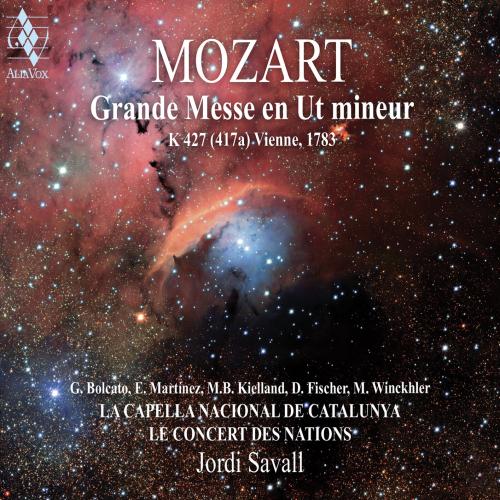
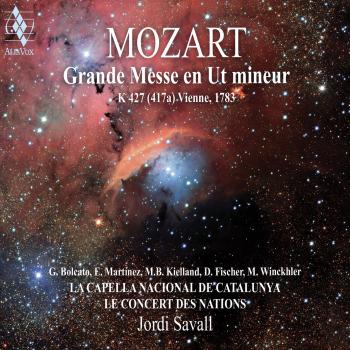
Mozart: Great Mass in C Minor, K. 427 Jordi Savall
Album Info
Album Veröffentlichung:
2025
HRA-Veröffentlichung:
09.01.2026
Label: Alia Vox
Genre: Classical
Subgenre: Vocal
Interpret: Jordi Savall
Komponist: Wolfgang Amadeus Mozart (1756-1791)
Das Album enthält Albumcover Booklet (PDF)
- Wolfgang Amadeus Mozart (1756 - 1791): Great Mass in C Minor, K. 427:
- 1 Mozart: Great Mass in C Minor, K. 427: I. Kyrie Eleison 05:34
- 2 Mozart: Great Mass in C Minor, K. 427: II. Gloria: Gloria in excelsis Deo 02:17
- 3 Mozart: Great Mass in C Minor, K. 427: II. Gloria: Laudamus te 04:38
- 4 Mozart: Great Mass in C Minor, K. 427: II. Gloria: Gratias agimus tibi 00:54
- 5 Mozart: Great Mass in C Minor, K. 427: II. Gloria: Domine Deus, Rex coelestis. Allegro moderato 02:45
- 6 Mozart: Great Mass in C Minor, K. 427: II. Gloria: Qui tollis peccata mundi 03:30
- 7 Mozart: Great Mass in C Minor, K. 427: II. Gloria: Quoniam tu solus sanctus 03:50
- 8 Mozart: Great Mass in C Minor, K. 427: II. Gloria: Jesu Christe 00:32
- 9 Mozart: Great Mass in C Minor, K. 427: II. Gloria: Cum Sancto Spiritu 03:53
- 10 Mozart: Great Mass in C Minor, K. 427: III. Credo: Credo in unum Deum 03:05
- 11 Mozart: Great Mass in C Minor, K. 427: III. Credo: Et incarnatus est 07:42
- 12 Mozart: Great Mass in C Minor, K. 427: III. Credo: Crucifixus – Et resurrexit. Andante – Allegro 06:31
- 13 Mozart: Great Mass in C Minor, K. 427: III. Credo: Et in Spiritum sanctum, « Tempo di Ciaccona » 04:13
- 14 Mozart: Great Mass in C Minor, K. 427: IV. Sanctus: Sanctus 01:13
- 15 Mozart: Great Mass in C Minor, K. 427: IV. Sanctus: Hosanna in excelsis 01:56
- 16 Mozart: Great Mass in C Minor, K. 427: IV. Sanctus: Benedictus. Allegro comodo 04:34
- 17 Mozart: Great Mass in C Minor, K. 427: IV. Sanctus: Hosanna in excelsis [da capo] 00:50
- 18 Mozart: Great Mass in C Minor, K. 427: V. Agnus Dei: Agnus Dei 03:59
- 19 Mozart: Great Mass in C Minor, K. 427: V. Agnus Dei: Dona nobis pacem 04:11
Info zu Mozart: Great Mass in C Minor, K. 427
Dieses unvollendete Meisterwerk Mozarts, das von Geheimnis und Genialität durchdrungen ist, erhält unter der inspirierten Leitung von Jordi Savall eine neue Dimension. Die fehlenden Teile wurden mit außergewöhnlicher historischer Genauigkeit und musikalischer Sensibilität auf der Grundlage von Mozarts eigenen Kompositionen und Skizzen wiederhergestellt und bieten ein einzigartiges Hörerlebnis. Savalls kraftvolle und feinfühlige Interpretation unterstreicht den Reichtum der Chöre, die Virtuosität der Solisten und die spirituelle Tiefe dieser Messe. Jede Note erklingt mit seltener Klarheit und Emotion und versetzt den Zuhörer in das Herz von Mozarts Kreativität. Eine unverzichtbare Aufnahme für Liebhaber barocker Musik und Mozart-Enthusiasten, die endlich die ganze Pracht dieses legendären Werks offenbart.
„Savall und sein Kollege Luca Guglielmi haben eine neue Version geschaffen, die den Torso zu einem grob mozartischen Ganzen macht... Die Darbietung von Savalls gewohntem Chor...” (The Times)
Giulia Bolcato, Sopran
Elionor Martinez, Sopran
Marianne Beate Kielland, Mezzosopran
David Fischer, Tenor
Matthias Winckhler, Bassbariton
La Capella Nacional de Catalunya
Le Concert des Nations
Jordi Savall, Dirigent
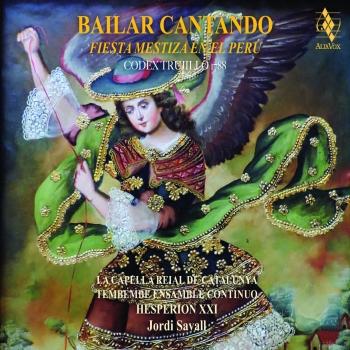
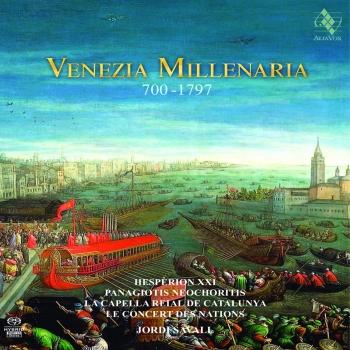
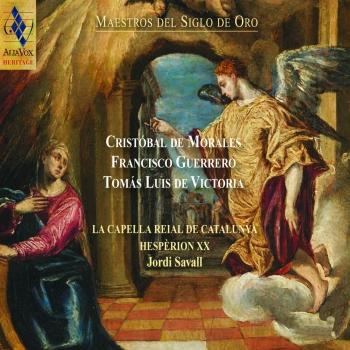
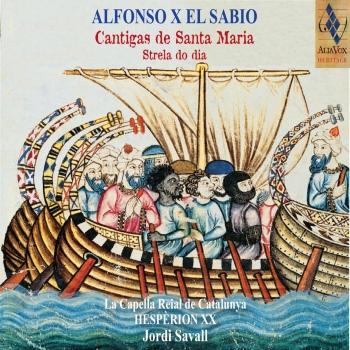
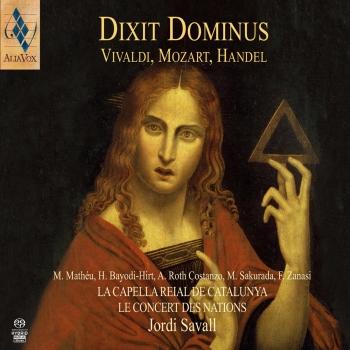
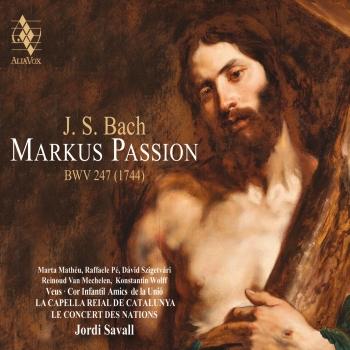
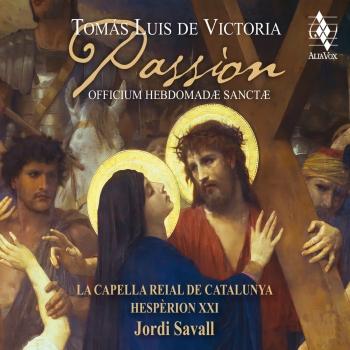
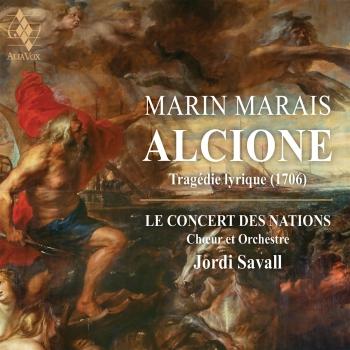
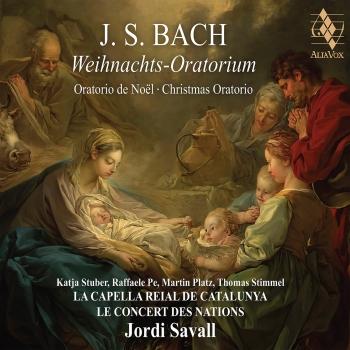
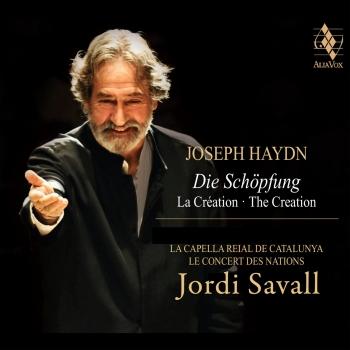
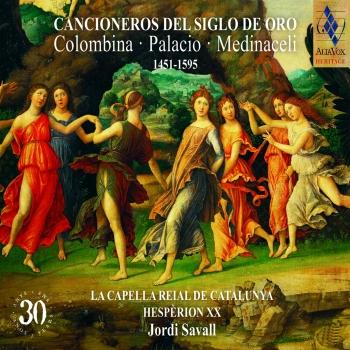
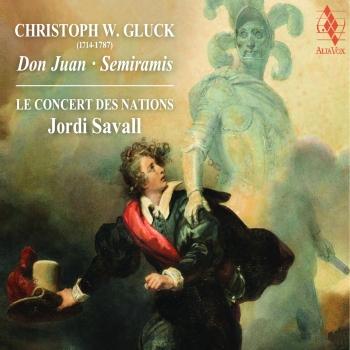
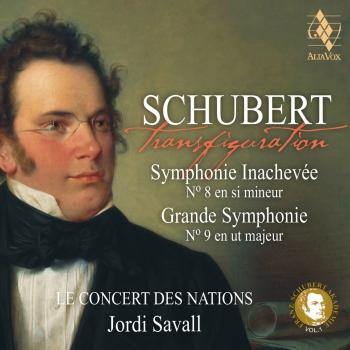
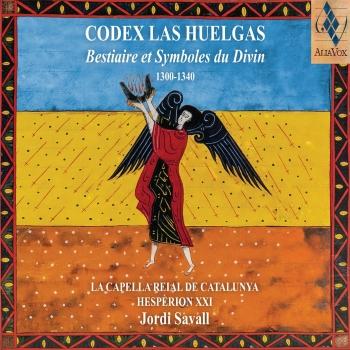
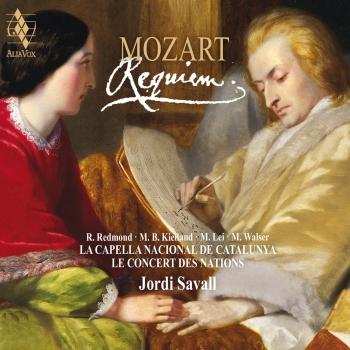
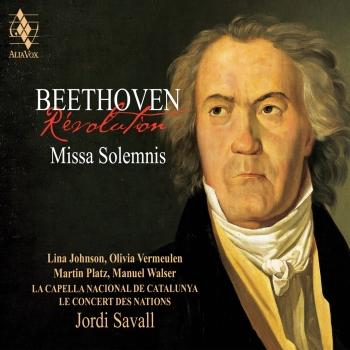
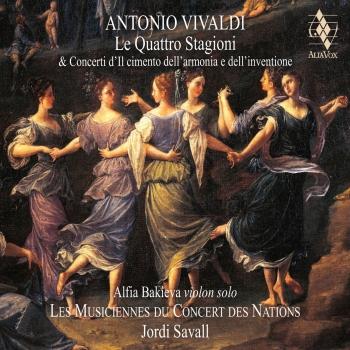
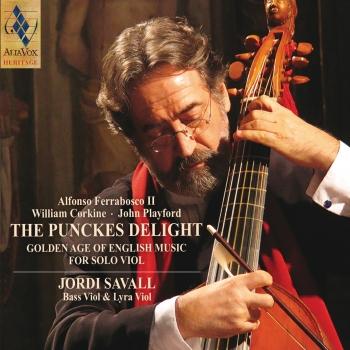
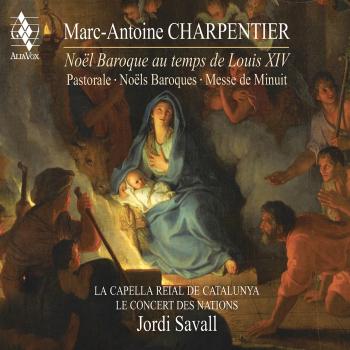
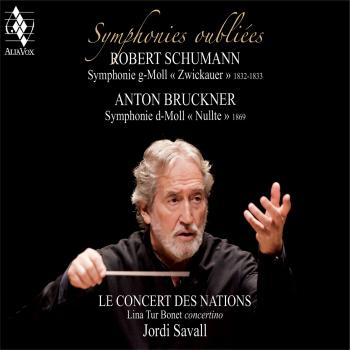
Jordi Savall
Born on August 1, 1941, in Igualada, near Barcelona, Spain; married Montserrat Figueras (a musician), 1968. Education: Barcelona Conservatory, diploma; Schola Cantorum Basiliensis, diploma, 1970. Addresses: Record company---Naive Classique, 148 rue du Faubourg Possinière, 75010 Paris, France.
The works performed by Catalan gambist and conductor Jordi Savall span several centuries---from the music of Alfonso el Sabio, king of Castile and Léon, to the works of J. S. Bach---bringing to life the splendor and passion of bygone eras. A performance by Savall is more than a musical experience: the extraordinary power and beauty of his playing magically removes the listener from the flux of time, creating a space in which such obstacles to enjoyment as historical distance, stylistic peculiarities, and idiomatic enigmas simply disappear. For example, historical periods, including the Baroque, have often been described as "distant." Indeed, the physical and mental universe of seventeenth-century France may seem distant to a person living in the twenty-first century. But that distance vanishes when Savall plays the music of the great French master of the bass viol, Marin Marais.
First of all, Savall's main instrument is the viola da gamba, or bass viol (he also plays the smaller viols), not as a quaint relic that needs some special justification or antiquarian explanation. True, in the late 1700s, the viola da gamba---which is not a different kind of cello, but a member of the viol family, a distinct group of instruments of varying sizes---was supplanted by the cello, as the latter instrument, with its potential for virtuosity, satisfied the requirements of changing musical styles. However, to Savall, his instrument is irreplaceable. In fact, according to Savall, the viola da gamba has a particular sonic richness that the more "modern" cello lacks. As Savall explained to Chris Pasles of the Los Angeles Times, the "viola da gamba is totally different from a cello. It's closer to the lute---a lute with a bow, in fact. With six strings, frets like a guitar, a softer sound, it's more rich in different colors." Instead of merely reproducing a particular musical composition, Savall captures and expresses the timeless humanity of the music, illuminating the particular composition as a universally comprehensible document of the human experience. A case in point is Savall's mesmerizing performance of Marais's musical description, found in Book V of his Pièces de viole, of his gallstone operation. Written under the influence of François Couperin's character pieces, this extraordinary composition, especially in Savall's version, remains one of the most suggestively dramatic works of Baroque music.
Born in 1941, near the Catalan city of Barcelona, Savall began his musical education at the age of six. After graduation from the Barcelona Conservatory, where he studied the cello, Savall went to Basel, Switzerland, where he studied the viola da gamba with August Wenzinger at the Schola Cantorum Basiliensis, receiving a diploma in 1970. His other teachers included Wieland Kuijken, in Brussels. In 1973 Savall took over Wenzinger's post at the Schola Cantorum. By the early 1970s, Savall was already considered one the greatest viola da gamba players. In addition, he worked hard to enrich his instrument's repertoire, rescuing many works from oblivion and performing and recording numerous forgotten compositions. Savall thus exemplified, as he still does, the learned performer, who constantly studies the vast field of old music, bringing many neglected compositions to light. Among these lesser-known compositions are works by Marais, whose rich and fascinating oeuvre includes more than 500 pieces for viola da gamba and keyboard accompaniment, assembled in five books of his Pièces de viole.
In 1974 Savall and his wife, soprano Montserrat Figueras, founded Hespèrion XX---later, in the twenty-first century, known as Hespèrion XXI---an international ensemble that has gained great acclaim for its extraordinary performances of music from the Middle Ages to the Baroque. In 1987, returning to his native city after his extensive sojourn in foreign lands, Savall formed the Capella Reial de Catalunya, a vocal group that, under his direction, has performed and recorded music by Tomáa Luis de Victoria, Francisco Guerrero, and Claudio Monteverdi.
In 1989, further expanding his repertoire and musical activities, Savall founded the Concert des Nations, an ensemble consisting of younger musicians from Spain and Latin America. Under Savall's direction, this orchestra, which plays on period instruments, has recorded a variety of works from the Baroque and Classical periods.
Savall's career received a tremendous boost when film director Alain Corneau asked him to play on the soundtrack for Tous les matins du monde, his 1992 film about Marais and his teacher, Sainte-Colombe. Based on Pascal Quignard's admirable 1991 novel--available in English as All the World's Mornings--which imagines the life of the mysterious Sieur de Sainte-Colombe, the film is a spell-binding portrait of seventeenth-century France with the music, performed by Savall, providing a foundation for the narrative. Savall himself indirectly inspired Quignard's novel: it was a 1976 recording by Savall that introduced the writer to Sainte-Colombe's music. The music that Savall performs on the soundtrack is mostly by Marais and Sainte-Colombe, though it also includes a segment of François Couperin's deeply spiritual Leçons des ténèbres. Savall is inspired in his performance of the heartrending Tombeau les regrets, which, in Quignard's imagination, Sainte-Colombe played to conjure up the spirit of his deceased wife. In Savall's hands, this music, which appears as a leitmotif throughout the film, graces the rich tapestry of the film as a mysterious aura.
In 1988 the French Ministry of Culture awarded Savall the title of Officier de l'Ordre des Arts et Lettres. His recordings, numbering more than one hundred, have received many awards, including the Double Disc of Gold and the Diapason d'Or. In 1997 Savall's recording company, Astrée, founded a separate label, Fontalis, for his recordings. The following year, Savall started his own label, Alia Vox, which later reissued many of his earlier recordings at an affordable price. Savall's remarkable career is more than a personal triumph: thanks to his superb musicianship, the viola de gamba has emerged from the shadows of the past, becoming the instrument of choice for many younger performers. For such performers, the rich repertoire of the Renaissance and Baroque offers not only infinite artistic challenges and possibilities but the opportunity to abolish the somewhat artificial barrier separating "early" music from the rest of the musical tradition. (Zoran Minderovic)
Booklet für Mozart: Great Mass in C Minor, K. 427