





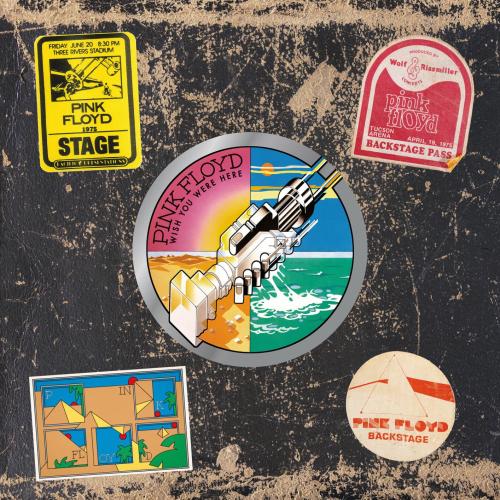
Wish You Were Here (50th Anniversary - Remastered) Pink Floyd
Album Info
Album Veröffentlichung:
2025
HRA-Veröffentlichung:
12.12.2025
Das Album enthält Albumcover
Entschuldigen Sie bitte!
Sehr geehrter HIGHRESAUDIO Besucher,
leider kann das Album zurzeit aufgrund von Länder- und Lizenzbeschränkungen nicht gekauft werden oder uns liegt der offizielle Veröffentlichungstermin für Ihr Land noch nicht vor. Wir aktualisieren unsere Veröffentlichungstermine ein- bis zweimal die Woche. Bitte schauen Sie ab und zu mal wieder rein.
Wir empfehlen Ihnen das Album auf Ihre Merkliste zu setzen.
Wir bedanken uns für Ihr Verständnis und Ihre Geduld.
Ihr, HIGHRESAUDIO
- 1 Shine On You Crazy Diamond (Pts. 1-5) (192 kHz) 13:32
- 2 Welcome to the Machine (192 kHz) 07:31
- 3 Have a Cigar (192 kHz) 05:07
- 4 Wish You Were Here (192 kHz) 05:30
- 5 Shine On You Crazy Diamond (Pts. 6-9) (192 kHz) 12:29
- 6 Wine Glasses 02:13
- 7 Have A Cigar (Alternate Version) (192 kHz) 07:11
- 8 Wish You Were Here 06:12
- 9 Shine On You Crazy Diamond (Early Instrumental Version, Rough Mix) (96 kHz) 18:53
- 10 The Machine Song (Roger's Demo) (192 kHz) 04:14
- 11 The Machine Song (Demo #2, Revisited) (96 kHz) 05:31
- 12 Wish You Were Here (Take 1) (96 kHz) 05:01
- 13 Wish You Were Here (Pedal Steel Instrumental Mix) (192 kHz) 06:01
- 14 Shine On You Crazy Diamond (Pts. 1-9, New Stereo Mix) (192 kHz) 25:26
- Live from the Los Angeles Sports Arena, 1975:
- 15 Raving And Drooling (Live from the Los Angeles Sports Arena, 1975) 12:33
- 16 You've Got To Be Crazy (Live from the Los Angeles Sports Arena, 1975) 13:49
- 17 Shine On You Crazy Diamond (Pts. 1-5) (Live from the Los Angeles Sports Arena, 1975) 12:51
- 18 Have a Cigar (Live from the Los Angeles Sports Arena, 1975) 04:46
- 19 Shine On You Crazy Diamond (Pts. 6-9) (Live from the Los Angeles Sports Arena, 1975) 13:32
- 20 Speak to Me (Live from the Los Angeles Sports Arena, 1975) 03:17
- 21 Breathe (In the Air) (Live from the Los Angeles Sports Arena, 1975) 02:59
- 22 On the Run (Live from the Los Angeles Sports Arena, 1975) 04:32
- 23 Time (Live from the Los Angeles Sports Arena, 1975) 06:41
- 24 The Great Gig in the Sky (Live from the Los Angeles Sports Arena, 1975) 06:08
- 25 Money (Live from the Los Angeles Sports Arena, 1975) 08:07
- 26 Us and Them (Live from the Los Angeles Sports Arena, 1975) 07:53
- 27 Any Colour You Like (Live from the Los Angeles Sports Arena, 1975) 08:31
- 28 Brain Damage (Live from the Los Angeles Sports Arena, 1975) 03:38
- 29 Eclipse (Live from the Los Angeles Sports Arena, 1975) 02:29
- 30 Echoes (Live from the Los Angeles Sports Arena, 1975) 22:38
Info zu Wish You Were Here (50th Anniversary - Remastered)
"Wish You Were Here (50th Anniversary)" bietet Fans eine spannende neue Perspektive auf eines der kultigsten und beliebtesten Alben von Pink Floyd. Die Ausgabe zum 50-jährigen Jubiläum enthält das Originalalbum sowie Bonustracks mit Studio-Raritäten, darunter bisher unveröffentlichte alternative Versionen und Demos, die das achte Studioalbum von Pink Floyd auf eine ganz neue Art präsentieren, die zum wiederholten Hören einlädt.
Mit "Shine On You Crazy Diamond", dem hypnotischen "Welcome To The Machine", dem bissigen "Have a Cigar" und dem unverzichtbaren Titelsong ist "Wish You Were Here" zweifellos eines der wichtigsten Alben in der Geschichte der Popmusik.
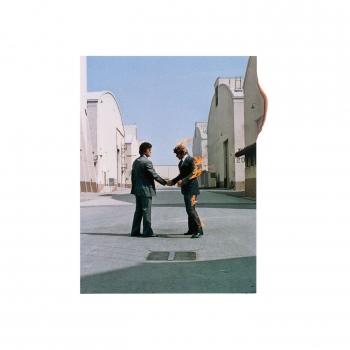
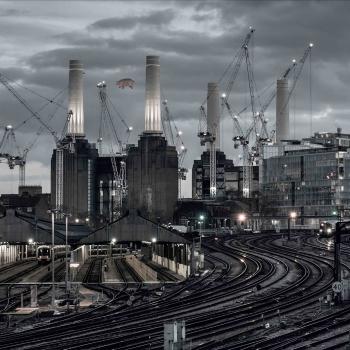
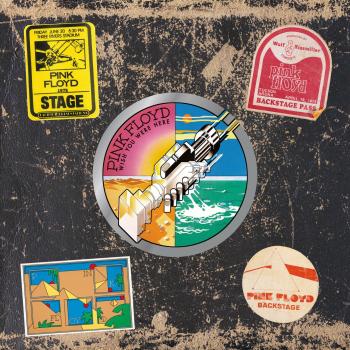
Die Themen des Albums – Abwesenheit, Isolation, Vergänglichkeit und Kritik an der Unaufrichtigkeit des Musikgeschäfts – spiegeln sich im ikonischen Albumcover wider. Auch 50 Jahre nach seiner Veröffentlichung klingt »Wish You Were Here« so aktuell und lebendig wie eh und je. Diese Sonderausgabe zum Jubiläum ermöglicht es den Fans zum ersten Mal, tiefer in einen entscheidenden Moment der Geschichte von Pink Floyd einzutauchen.
Pink Floyd
Digitally remastered
Zur Info: Dieses Album besteht aus verschiedenen Abtastraten. Siehe Trackliste - hinter jedem Track steht die Abtastraten.

Pink Floyd
Inductees: Syd Barrett (guitar, vocals; born January 6, 1946; died July 7, 2006), David Gilmour (guitar, vocals; born March 6, 1944), Nick Mason (drums; born January 27, 1945), Roger Waters (bass, synthesizer, vocals; born September 9, 1944), Rick Wright (keyboards, synthesizers; born July 28, 1945; died September 15, 2008).
Pink Floyd’s hallucinatory presentation of lights and music at London’s Roundhouse in 1966 brought psychedelia to the U.K. scene. The group carried rock and roll into a dimension that was more cerebral and conceptual than what preceded it. What George Orwell and Ray Bradbury were to literature, Pink Floyd is to popular music, forging an unsettling but provocative combination of science fiction and social commentary. In their early years, with vocalist, guitarist and songwriter Syd Barrett at the helm, Pink Floyd were the psychedelic Pied Pipers of the “London underground” scene. In the Seventies, with bassist Roger Waters providing more of the songwriting and direction, Pink Floyd became one of the most influential rock bands of all time.
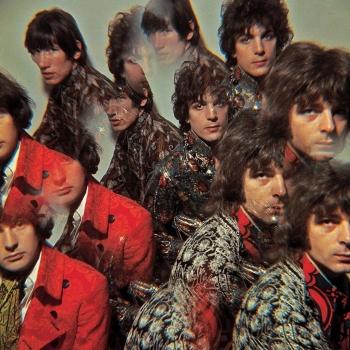
Before they settled on Pink Floyd, the group went by the names Sigma 6 and the Architectural Abdabs, and they mainly performed rhythm and blues covers. Singer-guitarist Syd Barrett provided Pink Floyd with most of its original early material, including the British hits “See Emily Play” and “Arnold Layne.” Barrett’s elfin, tuneful psychedelia made him the Lewis Carroll of the pop scene. Pink Floyd’s debut album, Piper at the Gates of Dawn, is a classic of psychedelic whimsy that epitomized the remarkable year of 1967 at its most playful and creative. As the British music magazine Q opined in 1995, “Piper at the Gates of Dawn is, even counting Sgt. Pepper, possibly the defining moment of English psychedelia and Syd Barrett’s magnum opus.” Among its highlights was a nine-minute instrumental, “Interstellar Overdrive,” that represented one of rock’s first forays into deep space. It was a preoccupation of Pink Floyd’s that would later surface in songs like “Set the Controls for the Heart of the Sun” (from A Saucerful of Secrets) and the group’s masterwork, Dark Side of the Moon.
Intense experimentation with LSD unfortunately transported Barrett from enlightenment to mental instability, and increasingly unpredictable behavior necessitated his departure from Pink Floyd in 1968. Among the prime “acid casualties” of the Sixties, Barrett subsequently released two magnificent, if eccentric, solo albums – The Madcap Laughs and Barrett, both from 1970 – with considerable input from his erstwhile bandmates in Pink Floyd. Thereafter, however, Barrett became one of rock’s most legendary hermits and the subject of Roger Waters’ tributary opus “Shine On You Crazy Diamond.” It was the side-long centerpiece of Pink Floyd’s Wish You Were Here (1975) and a sterling example of what the group has referred to as its recurring “theme of absence.”
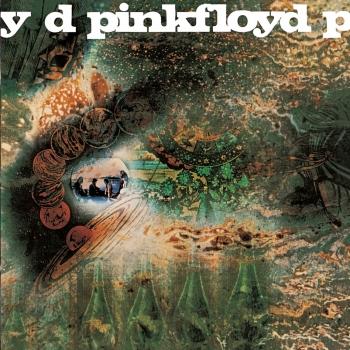
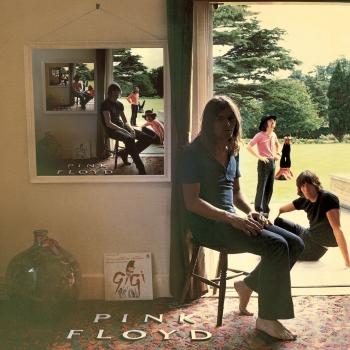
With guitarist David Gilmour on-board as Barrett’s replacement, Pink Floyd’s lineup remained constant for the next 15 years. In the wake of Piper, they recorded psychedelic soundscapes such as A Saucerful of Secrets and the double album Ummagumma, which comprised one disc of live performances and one of individual works by each band member. Laid-back but experimental, Pink Floyd kicked off the Seventies with the pastoral, atmospheric albums Atom Heart Mother (1970) and Meddle (1971). Each featured a side-long epic, “Atom Heart Mother Suite” and “Echoes,” respectively. Fittingly for a band with who took a cinematic approach to music, Pink Floyd provided music for three films. Their work as film scorers can be heard on the soundtrack albums More (1969), Zabriskie Point (1970) and Obscured by Clouds: Music from La Vallee (1972).
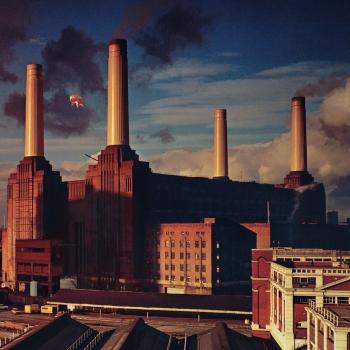
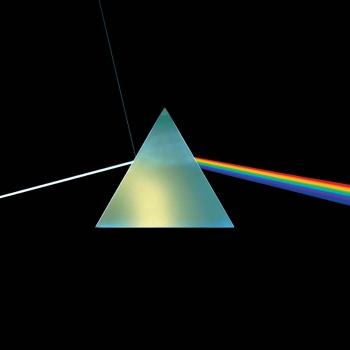
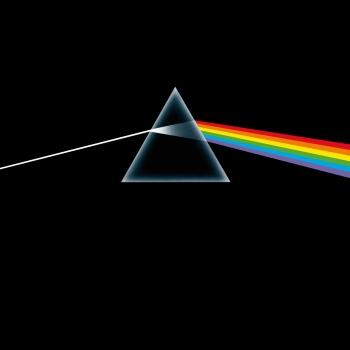
Their 1973 release Dark Side of the Moon hit Number One on the Billboard charts and ultimately broke all records by remaining on the Top 200 album charts for 741 weeks. Dark Side of the Moon did not drop off Billboard’s Top 200 album chart until 1988. The album signaled rock’s willingness to move from adolescence into adulthood, conceptually addressing such subjects as aging, madness, money and time. From its prismatic cover artwork to the music therein, Dark Side of the Moon is a classic-rock milestone. The subject of alienation was further explored in Wish You Were Here (1975), an album whose central preoccupation was the band members’ distance from each other (“Wish You Were Here”) and erstwhile leader Syd Barrett’s distance from reality (“Shine On You Crazy Diamond”). They turned their gaze outward yet again on the Orwellian Animals (1977), whose songs bore the titles “Pigs,” “Sheep” and “Dogs.”
Success continued into the Eighties with The Wall, a four-sided epic about a rock star named Pink who suffers a nervous breakdown while on tour. Much of it reflected chief architect Roger Waters’ dim view of the concert experience as rock expanded into arenas and stadiums. “I wanted to make comparisons between rock and roll concerts and war,” Roger Waters toldRolling Stone in 1982. He elaborated on this central tenet in the liner notes forThe Wall Live: 1980-81: “The idea that we, as individuals, generally find it necessary to avoid or deny the painful aspects of our experience, and in fact often use them as bricks in a wall behind which we may sometimes find shelter, but behind which we may just as easily become emotionally immured, relatively simply stated and easy to grasp.” That, in a nutshell, is the theme pursued by Pink Floyd from Dark Side of the Moon forward.
Possibly the most pessimistic album ever to reach #1, The Wall also addressed childhood, education and marriage, finding all of these passages to be dehumanizing. The Wall, the most theatrical and complex stage show that rock had ever seen, was performed 24 times in multi-night stands at four places - London, Los Angeles, Long Island and Dortmund, Germany. During the performance, an actual “wall” was constructed in front of the band, and its collapse at the end provided a fitting denouement. The Wall was subsequently revived by Roger Waters for a star-studded staging in Berlin in 1990, to commemorate the unification of East and West Germany. Performances from the Pink Floyd’s original staging of the epic saw release in 2000 as The Wall Live: 1980-81.
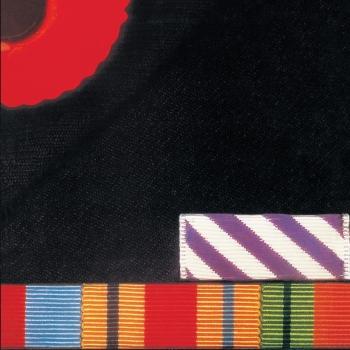
In the wake of The Wall, Pink Floyd itself gradually seemed to collapse, at least temporarily. The Wall turned out to be the last album the foursome of Waters, Gilmour, Wright and Mason recorded together. The Final Cut, which was recorded under extreme duress, found Wright absent from the group. Almost wholly Waters’ vision, it was an antiwar album triggered by Britain’s 1982 conflict in the Falkland Islands. The group unofficially disbanded after its release, and that seemed to mark the end of Pink Floyd, as the members involved themselves in endeavors, including solo projects, outside the band.
Throughout their history, the members of Pink Floyd have projected a rather static personal image, allowing music, lyrics, lighting and theatrical settings to communicate for them. Consequently, they’ve largely avoided the sort of public scrutiny that typifies the lives of rock stars. Little was known or reported about their personal lives. Only when a bitter war of words and a court battle erupted between Roger Waters and the others after Gilmour, Mason and Wright reconvened Pink Floyd was the silence broken.
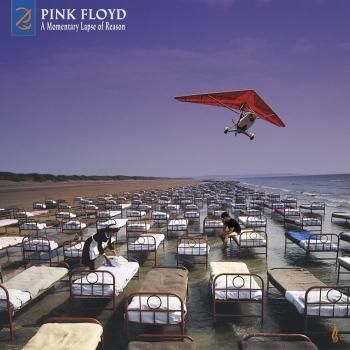
Pink Floyd released Momentary Lapse of Reason in 1987 and followed it up a year later with Delicate Sound of Thunder, a live album drawn from an extensive tour. The group reconvened in the Nineties with Gilmour again at the helm, releasing The Division Bell in 1994 and another tour souvenir,Pulse, a year later. Both albums went to the top of the charts, proving that the public’s fascination with this most unconventional supergroup had not dimmed in the least. (Source: www.rockhall.com)
Dieses Album enthält kein Booklet