


[].
Today May Be Tomorrow RYMDEN
Album info
Album-Release:
2026
HRA-Release:
25.09.2026
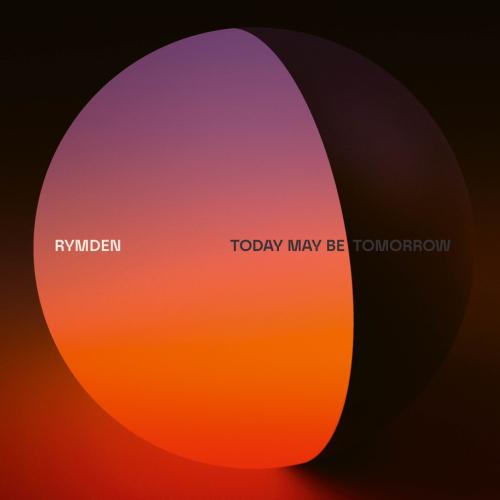
Album including Album cover
- 1 Today May Be Tomorrow 09:47
- 2 Nightfall 05:19
- 3 Valiant Revisited 04:31
- 4 Five Steps from a Dream 03:48
- 5 Undercover Lover 03:15
- 6 Here Now 04:49
- 7 Em 04:51
- 8 The Goodbye Song 04:41
Info for Today May Be Tomorrow
RYMDEN – Bugge Wesseltoft, Dan Berglund and Magnus Öström – return with their fourth studio album, "Today May Be Tomorrow."
Across their previous excursions, RYMDEN have travelled widely. "Reflections and Odysseys" announced the long-awaited meeting of two great streams in modern European jazz: Wesseltoft’s New Conception of Jazz and the Swedish bass-and-drums axis of e.s.t., with Berglund and Öström bringing their own history of power, precision, lyricism and volcanic live energy. "Space Sailors" pushed further outward, with the trio’s music expanding into a greater electronic, psychedelic, progressive and punk-inflected cosmos. "Valleys and Mountains" brought them closer to Earth, to landscapes both external and internal: hikes, woods, valleys, mountains, dreams, memory and rediscovery.
With "Today May Be Tomorrow", RYMDEN move into another kind of space: the unstable territory of time itself. The title suggests uncertainty, transition, and the strange elasticity of the present moment; today may already contain tomorrow, while yesterday may return in altered form. But there is also a more urgent question within it, one that belongs unmistakably to the world we live in now: will there be a tomorrow? This sense of movement through states of feeling — arrival, nightfall, dream, return, presence, and farewell — gives the album its quiet conceptual undertow.
The opening title track, composed by Magnus Öström, begins in a state of tension and open expanse before the bassline arrives and takes command. Those familiar with RYMDEN’s gift for monumental riffs will find little cause for complaint. “Today May Be Tomorrow” is a classic RYMDEN epic in the lineage of pieces such as “The Odyssey” or “The Life and Death of Hugo Drax”: a music of interlocking figures, hard propulsion, cascading force, and architectural momentum. It has, in the best possible sense, something of chill math-rock about it: complex, yes, but never forbidding; intricate, but still bodily, dynamic, and thrillingly direct.
Wesseltoft’s “Nightfall” changes the light. Shuffling brushed drums and elegant chordal movement give the opening an almost Bacharach-like grace, before the riff arrives and the scene shifts. The piece moves with a stop-start quality, as though nightfall is not a single event, but something viewed from several places in the landscape: from the street, from the window, from the hill above town, from the last glow before darkness gathers. When the solo section opens up, there are hints of dub reggae in the space and looseness of the groove, another example of RYMDEN’s ability to suggest several musical worlds without ever ceasing to sound like themselves.
“Valiant Revisited,” by Dan Berglund, reaches back to earlier history. The original “Valiant” appeared on Trialogue, the 2014 collaboration between Bugge Wesseltoft, Henrik Schwarz and Dan Berglund. Here, the material is reimagined within the RYMDEN trio language, with Magnus Öström completing the transformation. The mood is more serene this time, perhaps touched by melancholy; not a simple reprise, but a return altered by distance, memory, and the particular chemistry of this group. On an album called Today May Be Tomorrow, such an act of revisiting feels especially apt. The past is not merely recalled: it is re-entered, reshaped, and set moving again.
Öström’s “Five Steps From A Dream” begins with brushed drums falling like rain, while Wesseltoft’s piano chords meander gently through little cascades and ascending steps of notes. The piece seems less like the dream itself than the approach to it: the half-lit corridor before sleep, the threshold state in which thought, weather and melody begin to blur.
Berglund’s “Undercover Lover” then arrives like an attack. It crashes in and races forward, pushing close to unbridled discord while maintaining the driving groove that carries the chaos like a beacon. It is one of the album’s most forceful pieces, full of momentum and friction, yet shaped by the trio’s continuing gift for making even their most turbulent passages feel purposeful rather than merely explosive.
With “Here Now,” Wesseltoft returns the album to a more sedate and reflective pace. There are hints of soul and gospel here, an almost urban hymn-like quality, as though the trio are taking a gentle stroll through late light and warm concrete. Berglund’s bowed bass solo, high in the instrument’s register, is rich and resonant, at moments carrying an unexpected echo of country fiddle playing. As so often with RYMDEN, the comparison is less a stylistic label than a momentary glint: a colour caught in motion.
“Em,” also by Wesseltoft, has the feel both of a tone poem and of a wordless song. It may be among the most immediate of the album’s quieter pieces, not because it is simple, but because its emotional arc is so clear. It gathers itself gradually, melodically, and harmonically, before rising to an ecstatic finish, one of those RYMDEN culminations in which restraint and release become part of the same gesture.
The album closes with Öström’s “The Goodbye Song.” Chiming, melodic and carried by a shuffling beat, it is a farewell without despair. Traces of sadness and regret are present, but they are not allowed to dominate. As goodbyes go, this one is generous, positive, and still in motion; less an ending than a departure with the door left open to whatever tomorrow may turn out to be.
As with their previous albums, RYMDEN continue to maintain remarkable degrees of freedom and complexity. Time signatures shift, forms turn unexpected corners, and melodic elements weave through the music in ways that rarely take the obvious dominance they might be afforded by other artists. Yet none of this feels difficult for its own sake. The music moves with the naturalness of a toe-tapper, even when its inner mechanisms are intricate. Melody, rhythm, and texture are not hierarchically arranged so much as mutually entangled, each one underpinning, provoking, and illuminating the others.
What remains most striking is the unity of purpose. Individual composer credits are present — three pieces each from Öström and Wesseltoft, two from Berglund — but the overall signature is unmistakably RYMDEN. Wesseltoft’s piano and keyboards provide harmonic imagination, lyric intelligence, and textural depth; Berglund’s bass often seems to lead from the centre of the music, not merely anchoring but steering, singing, growling, and driving; Öström’s drums, percussion and voices create weather systems of rhythm and colour, from rainfall brushes to explosive force.
"Today May Be Tomorrow" does not abandon the cosmos, the landscape, or the cinematic breadth of the trio’s earlier work. Instead, it draws those elements inward and onward, into music concerned with time, return and transformation, while allowing the album title’s darker resonance to remain present: the future is not guaranteed, and tomorrow is no longer something that can be taken for granted. RYMDEN remain explorers, but here the expedition is not simply through outer space, nor across valleys and mountains. It is through the charged present moment itself: where yesterday may be revisited, tomorrow may already be arriving, and today may never be only today.
Bugge Wesseltoft, piano, keyboards
Dan Berglund, bass
Magnus Öström, drums
RYMDEN
With the Norwegian trio Rymden jazz has gained a new super group. Because with Bugge Wesseltoft, Dan Berglund, and Magnus Öström you have three of the most important protagonists on the Scandinavian jazz scene. Pioneer, sound magician and keyboardist Wesseltoft caused a furore with his formation New Conception of Jazz and bassist Berglund and drummer Öström made history with the influential group e.s.t. (Esbjörn Svensson Trio). Rymden’s music contains three elements: melancholy and atmospheric compositions, dramatic rhythms, and a virtuoso playing technique of the highest class. With their debut album Reflections And Odysseys the trio captures influences from modern jazz, classical music, film scores, and even rock. The collaboration of these three men leads to a fascinating synergy of the highest level.
Bugge Wesseltoft
“There is no musician or artist in the world that is not inspired by others. However, the important thing is to let inspiration develop, to work towards finding a unique means of personal expression.
This is what I believe and is what I have always tried to achieve … to find my own thing, my own voice. I dont want to be another carbon copy of any great musician, past or present: I don’t see the point of that. There have been so many good things done before, but one must find ones own sound.”
Bugge Wesseltoft
Since the early 1990´s Bugge Wesseltoft has made an impressive, truly post-modern transistion from his ECM nordic jazz traditions. Playing and recording together with the likes of Jan Garbarek, Sidsel Endresen, Terje Rypdal, Nils Petter Molvaer, Jon Eberson to forming his own innovative New Conception Of Jazz group and exquisite label “Jazzland Recordings”.
Wesseltoft is multi-decorated with critics prizes for creating a unique, fresh blend of “modern jazz”.
This album contains no booklet.