






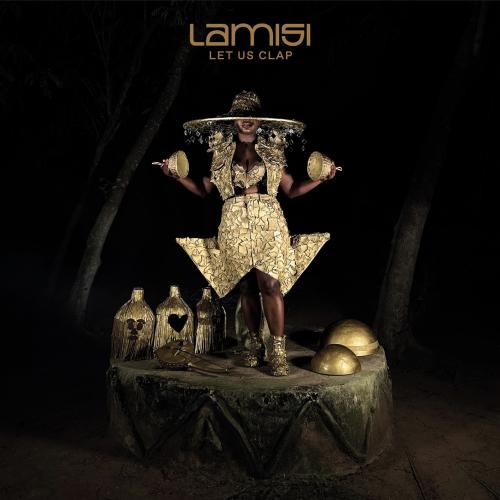
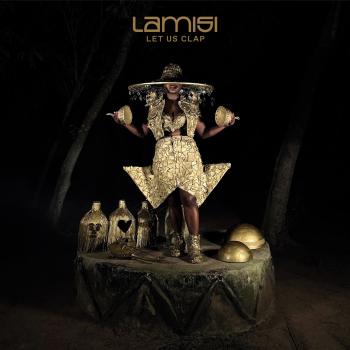
Let Us Clap Lamisi
Album info
Album-Release:
2026
HRA-Release:
20.02.2026
Album including Album cover
- 1 Agol 04:29
- 2 Zane Ya Kinkin 02:36
- 3 No Orgasm in Heaven 03:34
- 4 Tumsum 02:41
- 5 Come 04:05
- 6 Salma Daka 03:19
- 7 Nisaal 04:13
- 8 Unity 01:56
- 9 Painkiller 03:24
Info for Let Us Clap
You’ll hear it as you bump along the road into Zebilla, a vibrant town in the remote Upper East Region of northern Ghana. The sound of palms striking palms: rhythmic. Complex. Communal. You might hear laughter, and harmonised chanting. On arrival, you may even spot Ghanaian star Lamisi, singing and dancing in a circle of women, all of them clapping. And clapping. And clapping.
“I’ve been visiting my relatives in northern Ghana since I was small,” says Lamisi, who is based in Accra, the country’s capital, a 15-hour bus ride south, and whose Lamisi Fata Foundation is dedicated to empowering girls here in this vast tranche of West Africa with its unique customs, different ethnic groups and grassy savannah landscapes. And indeed, its drastically patriarchal society.
“The women of Zebilla have been teaching me the clapping rhythms that are the basis of so much of their music and dance,” she continues. “Wanlov and I decided to create a project that would combine this ancient artform with traditional acoustic instrumentation and the synthesised vocals that have been popular across Ghana for decades.”
Put your hands together, then, for Let Us Clap, an album whose nine tracks flip the script on notions of ‘traditional’ music, finding gold in the intersection between ancient organic grooves and studio-generated electronics, and aeons-old clapping patterns and heavily vocoded vocals. Throughout, tempos push and pull. Tension builds and releases. Tomorrow is in dialogue with the past.
Let Us Clap is not so much Afrofuturism — a phrase too often bandied about these days — as African futurism: a snapshot of the future of African music. Two traditions — raw and acoustic, digital and processed — woven into a textured, otherworldly whole.
“This music is fresh,” says Wanlov the Kubolor, the project’s musical director, and a Ghanaian/Romanian artist, activist and film‑maker so well known in Ghana that — particularly in busy, sprawling Accra — he stops traffic. “It’s magic music. It is the world that we are coming from.”
Wanlov’s activism for the rights of LGBT+ people in Ghana is consistent and fearless; with his sibling, the television presenter/model Sister Deborah, and Angel Maxine, the first openly transgender Ghanaian musician, he has used his music to push back against homophobia. His causes — environmentalism, decolonisation, female empowerment — have the people at heart, and fire his own socially conscious music with its trademark satirical raps. With a sound rooted in the urban scene, and in rap and hip‑hop, forward thinking is Wanlov the Kubolor’s stock‑in‑trade.
“Lamisi and I are pushing the limits of what traditional acoustic instruments could do, using the handclaps as the basis for the songs,” he continues. “We wanted to treat her vocals electronically, which is a sound that’s heard all over Ghana, even in the villages.”
Having recruited musicians including master drummer Ako Abednego Sowah and jazz‑trained trombonist Elikplim Kofi Amewode, and with Ghana‑based UK producer Joel Williams sharing mixing and co‑producing duties, Wanlov (or if you like, Emmanuel Owusu‑Bonsu) set about cherry‑picking from the armoury of instruments he keeps in his Trumu Studios in Teshie, a bustling suburb of Accra.
Shakers, calabash, congas, clavé; xylophone, bongos, dondo drum, flutes … The tracks on Let Us Clap find Wanlov on all or any of the above. But the instrument whose (biting, spooky) sound really reinforces the album’s ancient‑to‑future mysticism is the West African goje, a one‑string fiddle that Wanlov happens to play as a member of acclaimed Ghanaian group Alostmen.
On Let Us Clap, the (now late) Anthony Awuni showcases the goje’s original function as a solo instrument. “You feel the goje in your soul,” says Wanlov. “It brings a whole vibe.”
Two of Ghana’s biggest music names, Lamisi and Wanlov worked on the project once a week for several months, while the buzz surrounding their collaboration grew louder. No wonder: here was an icon of jazz and pop, and an icon of roots and hip‑hop, coming together to create raw, unapologetic music for a young, engaged audience — music that bridges the gap between West African music fans and music fans everywhere. Music to make you think and move.
Lyrics, for the most part, were written in Kusaal, the mother tongue of Lamisi’s Kusasi ethnic group (Wanlov speaks Twi, the language of his Akan pastor father, and Ga — ‘Kubolor’ is Ga for ‘wanderer’), with occasional passages in English.
“Wanlov doesn’t speak Kusaal but we understood each other perfectly,” says Lamisi. “Everything just flowed between us.”
Whether natural or vocoded, Lamisi’s singing voice is a thing of wonder. Buoyed by influences from Miriam Makeba to Chaka Khan, it’s a voice that, as a child, got heads turning in church, and later saw her singing backing vocals for Ghanaian rap icon Sarkodie and such Afro‑reggae‑dancehall royalty as Samini, Stonebwoy and Rocky Dawuni.
Lamisi fronted the popular Patchbay Band for eight years before releasing her solo debut Brighter Side in 2019. She took time out for first‑time motherhood, and continued to visit Zebilla whenever she could.
Let Us Clap arrived when it was ready. “The post‑production took over a year,” says Lamisi. “We wanted to do the best album we could do. And we did.”
All of which is extra remarkable, given Lamisi’s background. “I was raised with girls from northern Ghana who would drop out of school to get married and have children. My mother wed at 13 and had six girls,” she says. “Some of my late father’s family basically ignored us all because, for them, it was only boys that mattered.
“I was fortunate to receive an education and have worked hard to live my dreams. But these girls don’t have the same opportunities. I want to champion their unheard voices.”
As she is the voices of women and girls across the world. At a time in history when rollbacks on gains made in feminism and women’s rights are commonplace, Let Us Clap also serves as a reminder that vigilance — and action — matters.
“The time is now, the change is now,” sings Lamisi on ‘Agol’, the album’s boisterous opener, over handclaps, drums and the overtone‑rich Romanian telenka flute. ‘Zane Ya Kinkin’ extends a welcome from the Kusasi to people in Accra and people in Kumasi, the capital of the Ashanti region (indirectly referencing the longstanding chieftaincy and ethnic disputes of the Upper East Region, hundreds of miles away). And indeed, to people from abroad: “Food is on fire, freshly brewed beer is on standby,” she declares.
It was a slogan painted onto the back of a public bus in Accra that inspired ‘No Orgasm in Heaven’, the album’s clap‑happy first single. “I like working with funny, open‑minded people,” says Wanlov, who is also renowned as one half (with M3NSA) of beloved musical pranksters Fokn Bois. “This song has a similar sentiment to ‘No Beer in Heaven’, the 2004 hit by Atongo Zimba. It means enjoy your life now, as heaven is right here.”
While ‘Tum Sum’ also encourages staying present and spreading love (“Support people while they live”), ‘Come’ finds Lamisi offering support to the needy, augmented by Awuni’s guest vocals and rhymes in Pidgin from Wanlov. Then there is ‘Salma Daka’ — its title a Kusaal phrase meaning ‘box of gold’ — a song in Kusaal and Ga about ancestry, history and the threads of continuity.
“These women were so happy to see that my generation valued their clapping traditions,” says Lamisi. “They told me they are fighting to keep these rhythms alive, that even the weddings and funerals in towns and villages now feature DJs spinning loud autotuned music. They asked about my family and knew my clan, my roots. They always welcome me home. They call me their precious box of gold.”
‘Nisaal’ is a song about values, a reminder that we arrive in life with nothing and leave again with nothing. ‘Unity’, an exhortation to come together, finds polyrhythmic clapping rhythms dancing under flutes, xylophone and that expressive, ethereal goje.
‘Painkiller’, the album’s closer, is a rollicking paean to the power of music: “We were wrapping up one day when Sowah started messing on the xylophone and I started chanting ‘Music is a painkiller’,” says Wanlov. “Then Lamisi joined right in and started clapping along…”
Let Us Clap, then. Lamisi. Wanlov. The clapping patterns of northern Ghana. The digital wizardry of contemporary African music. Love and unity. Tradition and change.
A project worth putting your hands together for. (Words by Jane Cornwell)
Emmanuel Owusu-Bonsu, tilinca, shakers, calabash, goje, bongos, frikyiwa, xylophone, clave, congas, atenteben, dondo, vocals (tracks 5, 9)
Lamisi Akuka, vocals, claps
Ako Abednego Sowah, dondo, vocals (tracks 6, 9), conga (track 8), xylophone (track 9)
Elikplim Kofi Amewode, trombone (tracks 3, 9)
Anthony Awuni, vocals (track 5), goje solo (track 6)
Elikplim Kofi Amewode, trombone
Anthony Awuni, goje (solos)
Recorded at Trumu Studios
Mixed by Wanlov the Kubolor & Joel Williams
Mastering by Tim Oliver
Produced by Lamisi, Wanlov the Kubolor, & Joel Williams
Lamisi Akuka
(born Regina Lamisi Awiniman Anabilla Akuka in 1986) is an artist from Ghana.
Lamisi is a Ghanaian singer who has been lead singer for one of Ghanas finest bands (Patchbay Band) and has performed for and along with almost all A-Class artist from Ghana. After 8 years of playing with the band, Lamisi has now started her solo career as a full time artist hence releasing her maiden Album titled BRIGHTER SIDE in February 2019. She has since being active on live stages at some of Ghana's premium musical events within 2019 including the Stanbic Jazz Festival 2019, Ghana World Music Festival , Africa Legends Night 2019 etc.
She recently recorded a yet to be released song with Dr. Heather Maxwel of VOA Africa fame, gearing up for call ups for some music festivals within the year.
Emmanuel Owusu-Bonsu
known by his stage name Wanlov the Kubolor born September 8, 1980, in Ploie?ti, Romania is a Ghanaian-Romanian musician, film director and cultural icon born to an Akan father and a Romanian mother. Kubolor is a Ga word that essentially means wanderer, vagabond. Kubolor, whose style is fiercely independent, and is arguably the most revolutionary artist in Ghana credited with creating a unique sound that pushes the borders of Afro-Pop.He is the brother of the television show host, model, musician Deborah Owusu-Bonsu.
His parents moved to Ghana before he was a year old, and he grew up in an artistic household where both parents were avid collectors of music and had an interest in the arts. He attended Adisadel College. It was while he was at Adisadel that he began rapping his favourite lyrics with high school friends and performing the local circuit in Cape Coast and Takoradi. It was here that his enduring musical partnership with the songwriter M3NSA was formed. He then moved to the United States for college in 2000 where he attended the University of Mary Hardin Baylor. He dropped out after two years of studying Computer Science and Business Administration and from then on was to dedicate himself fully to his musical career.
Kubolor is affiliated with the Ghanaian-based production house Pidgen Music. Out of his musical and personal experiences, he has succeeded in creating a space to share his art comfortably. In refusing to modify his versatile style to fit the mold of pre-existing genres, Kubolor hopes to inspire others to create a personal evolutionary path for positive change.His widely acclaimed versatility is heard on his debut album "Green Card", released in late 2007 on his return to Ghana after a 7-year stay in the USA. Already being referred to as an icon, this enigmatic man has gone on to capture the hearts and minds of the people of Ghana. Though at home with his fans, he is also no stranger to the company of internationally acclaimed musicians. Wanlov the Kubolor has had the honor of collaborating with Gyedu-Blay Ambolley, Ghana's Rap pioneer / High life legend, Reggie Rockstone, the Godfather of Hip life, among other well-respected artists worldwide. His flair for the extraordinary has netted him wide acclaim and in this well-earned popularity, Kubolor was recently chosen as one of 5 artists to represent Africa as a lyricist/songwriter in the "Routes to Roots" project. A collaborative initiative conceived by Bigga Fish, a UK-based organization that engages young people through creative mediums, Routes to Roots is a musical project with 10 Artists carefully selected from Africa and the UK to record an album that represents all sides of the cultural spectrum. He has developed his "Gipsy" persona, by wearing only wrappers and no shoes, styling himself as a voice for the revolution by the common man on the streets of Ghana. He has developed a strong socially conscious identity, campaigning for the cause of OAfrica a charity for out-of-home children and various similar causes, in particular, those linked to ecology or pollution in Ghana. In 2017, he told members of Blogging Ghana that he "is considering making a third instalment to his Ghanaian Pidgin-English musical Coz Ov Moni".
This album contains no booklet.