







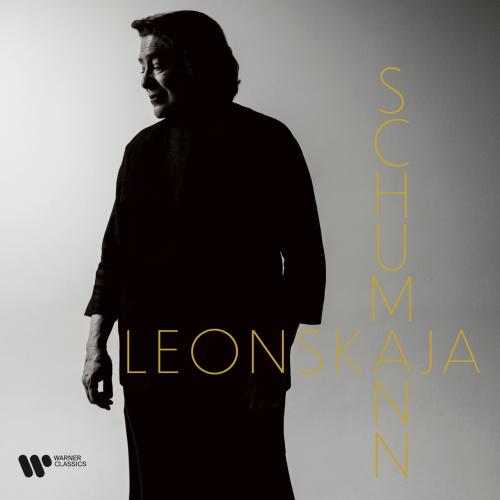
Schumann: Variations & Sonatas Elisabeth Leonskaja
Album info
Album-Release:
2026
HRA-Release:
27.02.2026
Label: Warner Classics
Genre: Classical
Subgenre: Instrumental
Artist: Elisabeth Leonskaja
Composer: Robert Schumann (1810-1856)
Album including Album cover Booklet (PDF)
I`m sorry!
Dear HIGHRESAUDIO Visitor,
due to territorial constraints and also different releases dates in each country you currently can`t purchase this album. We are updating our release dates twice a week. So, please feel free to check from time-to-time, if the album is available for your country.
We suggest, that you bookmark the album and use our Short List function.
Thank you for your understanding and patience.
Yours sincerely, HIGHRESAUDIO
- Robert Schumann (1810 - 1856): Abegg Variations, Op. 1:
- 1 Schumann: Abegg Variations, Op. 1: Thema 00:48
- 2 Schumann: Abegg Variations, Op. 1: Variation I 01:23
- 3 Schumann: Abegg Variations, Op. 1: Variation II 01:09
- 4 Schumann: Abegg Variations, Op. 1: Variation III 01:02
- 5 Schumann: Abegg Variations, Op. 1: Variation IV 01:11
- 6 Schumann: Abegg Variations, Op. 1: Finale alla fantasia 02:42
- Papillons, Op. 2:
- 7 Schumann: Papillons, Op. 2: Introduzione 00:10
- 8 Schumann: Papillons, Op. 2: No. 1, Allegro comodo 00:40
- 9 Schumann: Papillons, Op. 2: No. 2, Prestissimo 00:21
- 10 Schumann: Papillons, Op. 2: No. 3, Allegro molto 00:48
- 11 Schumann: Papillons, Op. 2: No. 4, Presto 00:46
- 12 Schumann: Papillons, Op. 2: No. 5, Più andante 01:04
- 13 Schumann: Papillons, Op. 2: No. 6, Allegro molto - Poco più tranquillo 00:54
- 14 Schumann: Papillons, Op. 2: No. 7, Semplice 00:56
- 15 Schumann: Papillons, Op. 2: No. 8, Allegro feroce - Poco meno mosso 01:11
- 16 Schumann: Papillons, Op. 2: No. 9, Prestissimo 00:49
- 17 Schumann: Papillons, Op. 2: No. 10, Vivo - Più lento 02:00
- 18 Schumann: Papillons, Op. 2: No. 11, Allegro maestoso - Più lento - In tempo 03:37
- 19 Schumann: Papillons, Op. 2: No. 12, Finale. Con brio - Più lento 02:02
- Symphonic Etudes, Op. 13:
- 20 Schumann: Symphonic Etudes, Op. 13: Theme 01:29
- 21 Schumann: Symphonic Etudes, Op. 13: Variation I 01:47
- 22 Schumann: Symphonic Etudes, Op. 13: Variation II 02:17
- 23 Schumann: Symphonic Etudes, Op. 13: Variation III 01:43
- 24 Schumann: Symphonic Etudes, Op. 13: Variation IV 03:28
- 25 Schumann: Symphonic Etudes, Op. 13: Variation V 03:26
- 26 Schumann: Symphonic Etudes, Op. 13: Theme. Andante 01:28
- 27 Schumann: Symphonic Etudes, Op. 13: Etude I 01:20
- 28 Schumann: Symphonic Etudes, Op. 13: Etude II 03:17
- 29 Schumann: Symphonic Etudes, Op. 13: Etude III 01:30
- 30 Schumann: Symphonic Etudes, Op. 13: Etude IV 00:53
- 31 Schumann: Symphonic Etudes, Op. 13: Etude V 01:24
- 32 Schumann: Symphonic Etudes, Op. 13: Etude VI 01:03
- 33 Schumann: Symphonic Etudes, Op. 13: Etude VII 01:46
- 34 Schumann: Symphonic Etudes, Op. 13: Etude VIII 02:16
- 35 Schumann: Symphonic Etudes, Op. 13: Etude IX 00:43
- 36 Schumann: Symphonic Etudes, Op. 13: Etude X 01:22
- 37 Schumann: Symphonic Etudes, Op. 13: Etude XI 02:14
- 38 Schumann: Symphonic Etudes, Op. 13: Etude XII 07:40
- Theme and Variations in E-Flat Major, WoO 24 "Geistervariationen":
- 39 Schumann: Theme and Variations in E-Flat Major, WoO 24 "Geistervariationen": Theme 01:52
- 40 Schumann: Theme and Variations in E-Flat Major, WoO 24 "Geistervariationen": Variation I 01:41
- 41 Schumann: Theme and Variations in E-Flat Major, WoO 24 "Geistervariationen": Variation II 01:48
- 42 Schumann: Theme and Variations in E-Flat Major, WoO 24 "Geistervariationen": Variation III 02:08
- 43 Schumann: Theme and Variations in E-Flat Major, WoO 24 "Geistervariationen": Variation IV 01:53
- 44 Schumann: Theme and Variations in E-Flat Major, WoO 24 "Geistervariationen": Variation V 02:50
- Piano Sonata No. 1 in F-Sharp Minor, Op. 11:
- 45 Schumann: Piano Sonata No. 1 in F-Sharp Minor, Op. 11: I. Un poco adagio - Allegro vivace 13:38
- 46 Schumann: Piano Sonata No. 1 in F-Sharp Minor, Op. 11: II. Aria. Senza passione, ma espressivo 02:55
- 47 Schumann: Piano Sonata No. 1 in F-Sharp Minor, Op. 11: III. Scherzo. Allegrissimo 05:46
- 48 Schumann: Piano Sonata No. 1 in F-Sharp Minor, Op. 11: IV. Finale. Allegro un poco maestoso 13:17
- Piano Sonata No. 2 in G Minor, Op. 22:
- 49 Schumann: Piano Sonata No. 2 in G Minor, Op. 22: I. So rasch wie möglich 07:38
- 50 Schumann: Piano Sonata No. 2 in G Minor, Op. 22: II. Andantino. Getragen 04:44
- 51 Schumann: Piano Sonata No. 2 in G Minor, Op. 22: III. Scherzo. Sehr rasch und markiert 02:03
- 52 Schumann: Piano Sonata No. 2 in G Minor, Op. 22: IV. Rondo. Presto 06:52
Info for Schumann: Variations & Sonatas
This recording of Schumann’s piano works by Elisabeth Leonskaja relates to three aspects of the composer’s character: his multiple personalities, his love of cryptograms and musical enigmas, and his passionate belief in spiritualism. Schumann was born in 1810 and lived through a crucial period in the union of metaphysics, philosophy, magic and music. These influences were especially important in the creation of his last works, perhaps more so than many musicologists and experts would recognise or consider.
The climax of this double cd is Elisabeth Leonskaja’s interpretation of the Symphonic Etudes Op.13, one of the most magnificent works of the piano repertoire.
What makes this presentation special is its new approach and beginning, based on the sketches and earlier draft-versions. Clara, who was responsible for the first complete publication (Breitkopf & Härtel), confessed in 1873, "I've copied some symphonic etudes for Simrock found among Robert's unpublished drafts, which he wanted to be printed as appendices. I was against the idea at the beginning, but many have insisted so strongly that I have finally given in." (Simrock 1873, Oeuvre posth., Suite de l‘Oeuvre 13).
This recording puts its audience in the position of opting for either the earliest emanation of a work in progress – something like a fragment of a visionary idea never allowed to reach fruition – or for an exemplary performance in the shape of a concise and distinctive mature version.
"Schumann’s unpopular Second Sonata has been heavily dramatized by some pianists in order to make it allegedly more attractive. However, Schumann’s ‘As quickly as possible’ does not impress Elisabeth Leonskaja too much. She rather tries to differentiate the music in dynamics, tempi and colours, so that she, although with two minutes more than Hamelin or her mentor Svjatoslav Richter, makes the sonata very appealing through a great art of sound and phrasing. She plays the sublime Andantino with a kind of tender restraint that is very touching. Compared to the Hamelin and Richter recordings the tempi of the scherzo and the final movement are also slower in Leonskaya’s performance, but here too this does not do any harm, on the contrary, the smoother contrasts effectively underline the confusion of thoughts that characterizes this music." (Remy Franck, pizzicato.lu)
Elisabeth Leonskaja, piano
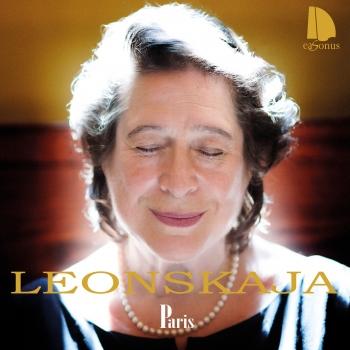
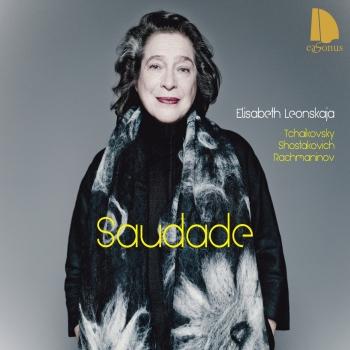
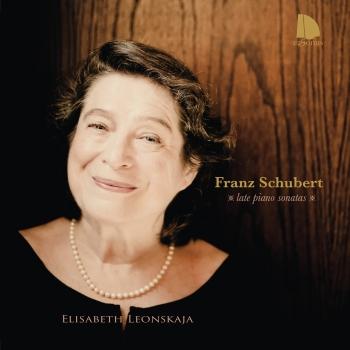
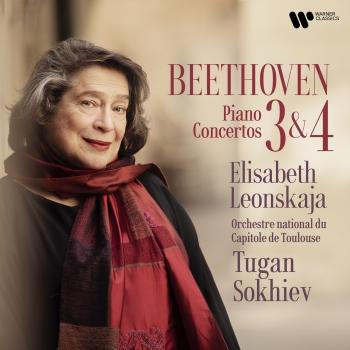
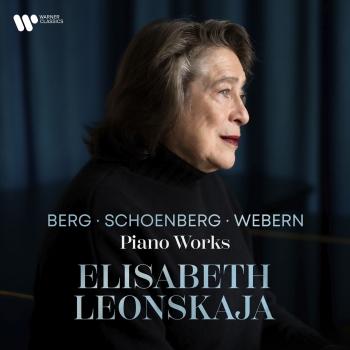
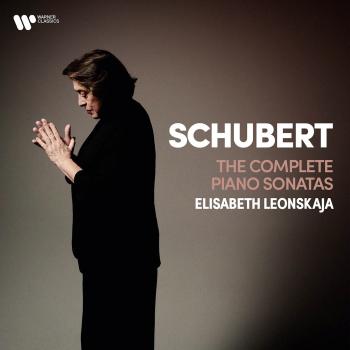
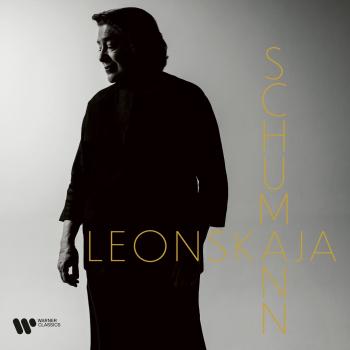
Elisabeth Leonskaja
has long been among the most celebrated pianists of our times. In a world dominated by commercial media, she has remained true to herself and to music, in the tradition of great Russian musicians such as David Oistrakh, Sviatoslav Richter and Emil Gilels. Like them, she has always stood for the quintessence of music even under the most difficult political conditions. And like them, she has never been interested in showy appearances. On stage, however, she overwhelms the audience with the power of the music; this has been the substance and the goal of her life.
Born into a Russian family in Tbilisi, Elisabeth Leonskaja gave her first concerts at the age of eleven. While still a student at the Moscow Conservatory, she won prizes at major international piano competitions, including the Enescu Prize, the Marguerite Long-Jacques Thibaud Competition and the Queen Elisabeth of Belgium Prize. Her musical development was decisively influenced by her collaboration with Sviatoslav Richter who recognized her exceptional talent and encouraged her by inviting her to play duo concerts with him. This musical and personal friendship continued until Richter’s death in 1997.
Leonskaja left the Soviet Union in 1978 and made Vienna her home. Since then, she has performed as soloist with the world’s finest orchestras and has worked with many renowned conductors. She is a regular guest at numerous international festivals, such as the Wiener Festwochen, the Schleswig-Holstein Music Festival, the Schuertiade Schwarzenberg, the Spring Festival Tokyo and the December Nights in Moscow. Her name is also to be found among international recitalists in the most prominent piano series of major musical centers oft he world from Paris to Vienna to Melbourne.
In addition to her many solo engagements, chamber music remains an important part of her work. She has performed many times with string quartets, such as the Belcea, Borodin Artemis and Jerusalem quartets. She also had a longstanding musical friendship with the Alban Berg Quartet, and their piano quintet recordings are legendary.
Numerous LPs and CDs bear witness to the pianist’s high artistic level, and her recordings have repeatedly been awarded prizes. The most recent appeared on eaSonus (www.easonus.com). “Paris”, with works by Ravel, Enescu and Debussy, was named the Solo Recording of the Year 2014 by the ICMA Jury. “Saudade”, an homage to Russian culture with works by Tchaikovsky, Shostakovich and Rachmaninoff, was released in November 2017. A complete recording of Franz Schubert’s piano sonatas in two volumes of four CDs each has been available since April 2016 and May 2019 respectively. A double-CD with variations and sonatas by Robert Schumann followed in January 2020.
In her second homeland, Austria, Elisabeth Leonskaja is an honorary member of the Vienna Konzerthaus. In 2006 she was awarded the Austrian Cross of Honor for Science and Art, First Class, for her outstanding service to the culture of the country. It is the highest award in Austria. In Georgia, she was named Priestess of Art in 2016, this country’s highest artistic honor. In 2020 she received the International Classical Music (ICMA) Lifetime Achievement Award.
Booklet for Schumann: Variations & Sonatas